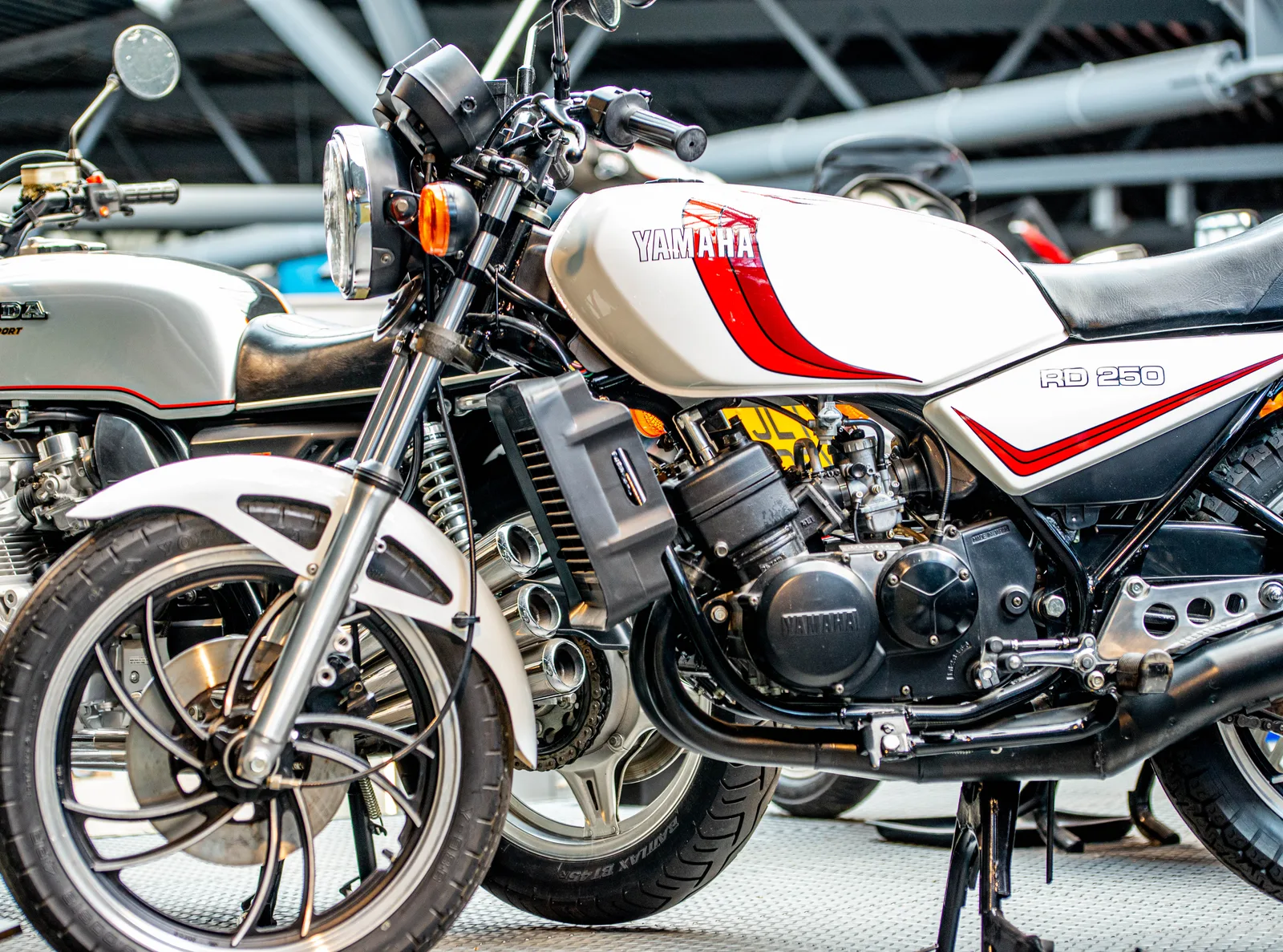
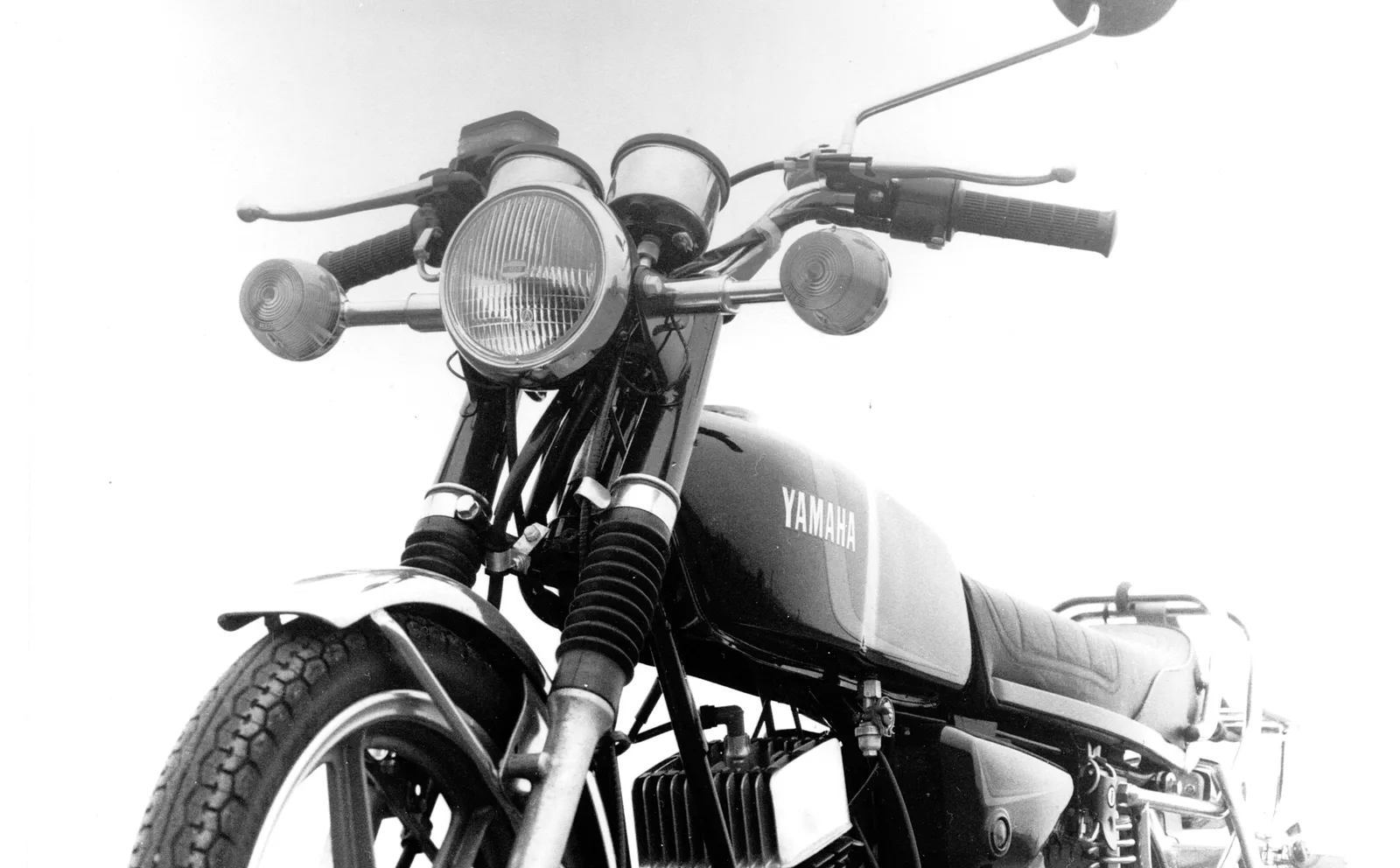
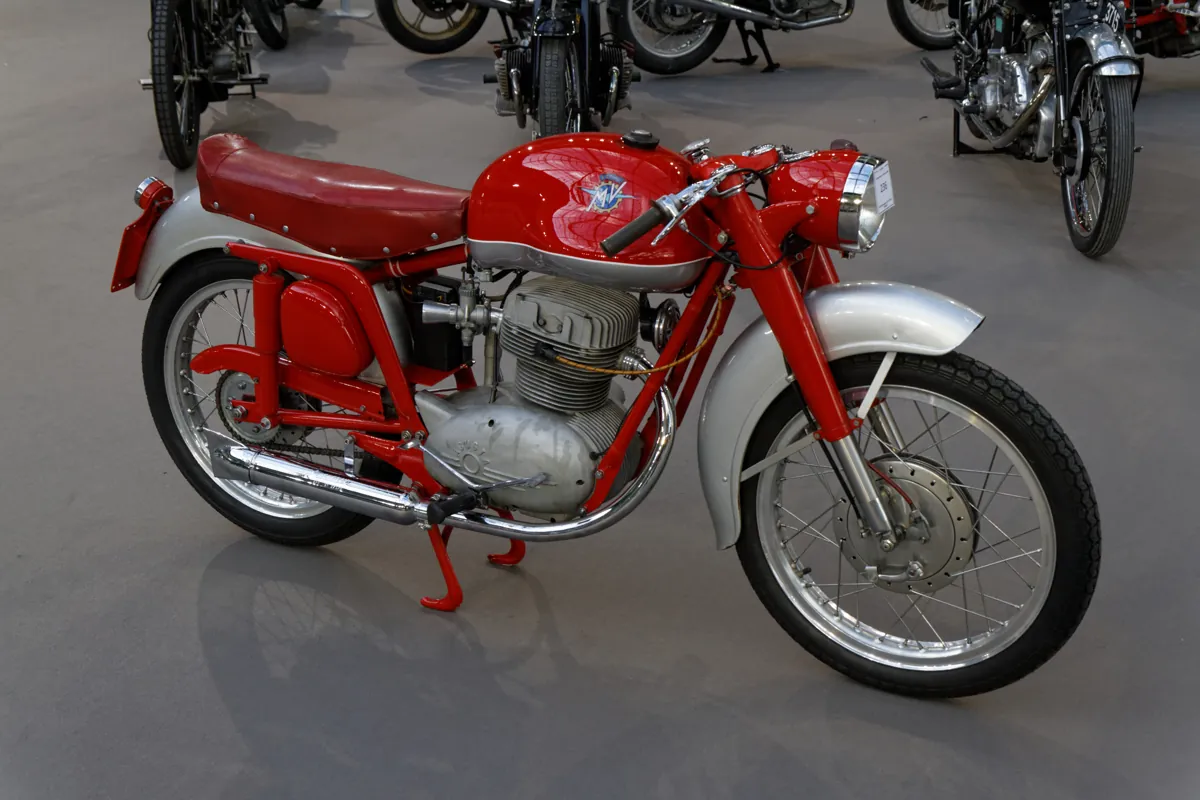
The Yamaha RD250LC is the 247 cc liquid-cooled two-stroke twin Yamaha launched in 1980 alongside the RD350LC. Known by its 4L1 model code — and sold in Japan as the RZ250 — it used the same recipe as its bigger brother in miniature: a reed-valve parallel twin with liquid cooling, a six-speed gearbox and Yamaha's Monocross single-shock rear suspension, producing around 35 hp. That output mattered because of British licensing law: at the time, learner riders could ride machines up to 250 cc, which made the RD250LC the fastest thing a seventeen-year-old could legally put an L-plate on. When the learner limit dropped to 125 cc in 1983, demand for 250s collapsed almost overnight and the model faded from the UK market, though it lived on in other countries. Today the RD250LC is scarcer in good condition than the 350, because most were bought by teenagers, ridden hard and crashed or neglected — the classic learner-bike life cycle. Clean survivors are now prized.
By Rahil "TorqueInductions" — full disclosure first: I have never owned an H1. My two-stroke life is RD350s, an RX100 and a Jawa 250, and this page is a historian's piece, not an…
By Rahil "TorqueInductions" — Torque Induction isn't history to me: it's the reed blocks I pull, clean and check on my own RD350s and my RX100. Petals firs…
By Rahil "TorqueInductions" — full disclosure first: I have never owned a YZ490. My two-strokes are road bikes — RD350s and an RX100 — so this page sti…
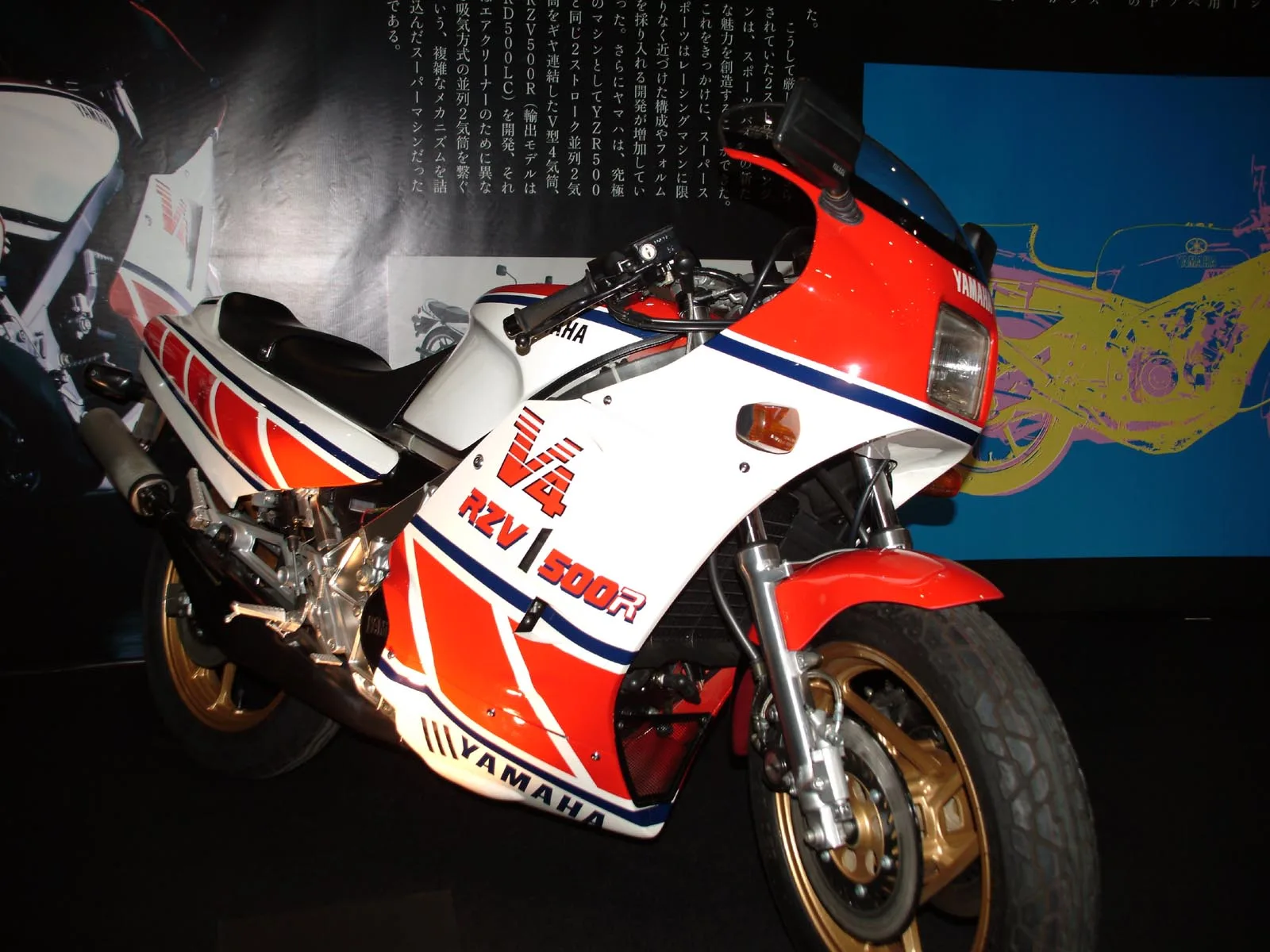
The Yamaha RZV500R is the Japanese home-market version of Yamaha's 499 cc V4 two-stroke flagship, sold elsewhere as the RD500LC in Europe and the RZ500 in Canada and Australia. Where those export bikes used a steel frame, the RZV500R was built around an aluminium frame, making it the lightest of the family. The trade-off was power: Japanese regulations capped the RZV500R at 64 PS, while export RD500LC models were rated at 88 PS. Everything else that defines the bike carried over — the liquid-cooled 50-degree V4 with two crankshafts, reed-valve induction, YPVS exhaust power valves, a six-speed gearbox and gear-driven primary drive. The RZV500R was built in the mid-1980s for Japan only and was never officially exported, which is why surviving examples are now sought after by collectors who want the rarest version of Yamaha's Grand Prix replica. It remains the answer to a good trivia question: the fastest-looking RD500 is, on paper, the slowest one Yamaha made.
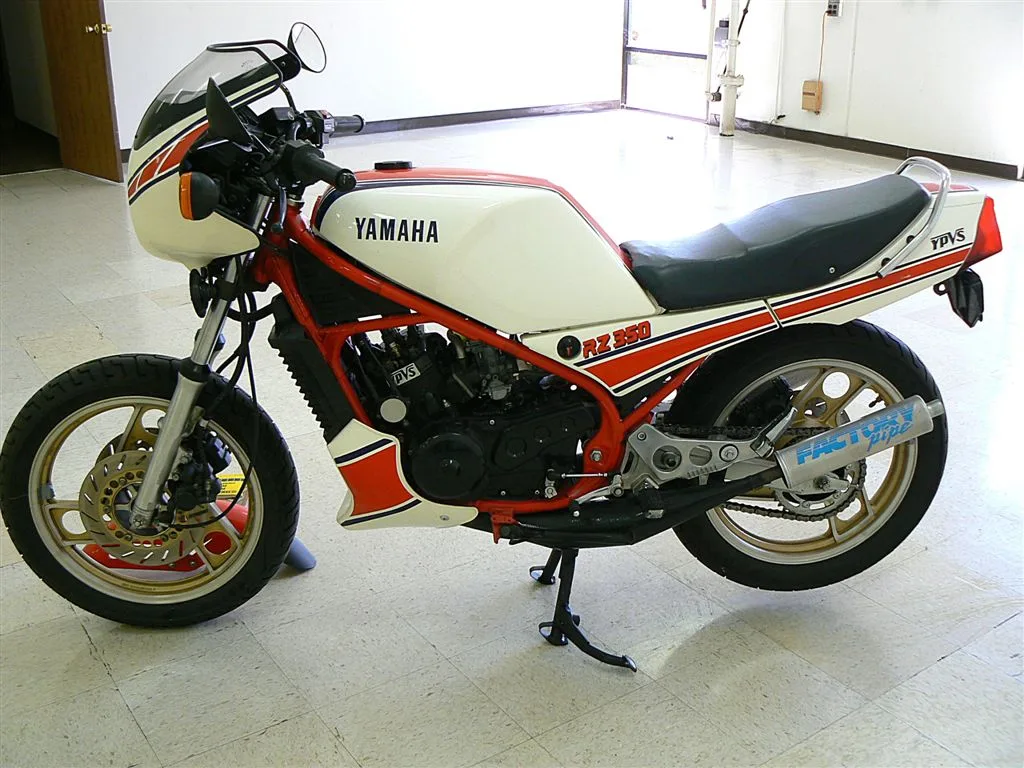
The Yamaha RZ250 and RZ350 were the Japanese-market names for the liquid-cooled two-stroke twins Europe knew as the RD250LC and RD350LC. The RZ250 debuted at the 1979 Tokyo Motor Show and went on sale in 1980: a 247 cc liquid-cooled twin making 35 PS — 140 PS per litre, a figure Yamaha itself advertised — with TZ250-derived technology, Monocross suspension and cast wheels. The RZ350 followed in 1981 with the 347 cc engine in 45 PS Japanese trim, and earned the nickname "Nanahan Killer" — the 750 Killer — for embarrassing much larger four-strokes on Japanese mountain roads. The same basic machines were sold as RDs in Europe and RZs in Japan, Australia and (for the later YPVS 350 only) North America. Japan kept developing its own line: the basic RZ250 remained in production until about 1986, joined from 1983 by the YPVS-equipped, faired RZ250R and RZ350R, as the RZs helped ignite Japan's racer-replica boom. Both models are now sought-after Japanese classics at home and abroad.
The Yamaha RD350LC — nicknamed "Elsie" from its initials — was Yamaha's liquid-cooled two-stroke sports twin, launched in 1980 (model code 4L0; the 250 was 4L1) and built until the YPVS model replaced it in 1983. Its 347 cc reed-valve parallel twin (64 × 54 mm) made 47 bhp at 8,500 rpm, and it weighed 143 kg dry with a monoshock (cantilever) rear suspension, cast wheels, a six-speed gearbox and twin front discs. Developed in Europe to keep the performance two-stroke alive outside America, where emissions rules were killing air-cooled models, the LC borrowed its liquid cooling and monoshock directly from Yamaha's TZ racers, though under the skin the engine was an evolution of the air-cooled RD. It was voted MCN Machine of the Year in 1980, America never officially got it, and Japan received it as the RZ350 in 1981. The original LC's plain-exhaust-port engine lasted just three seasons before the YPVS power-valve model arrived. "Elsie" remains shorthand for the entire LC era.
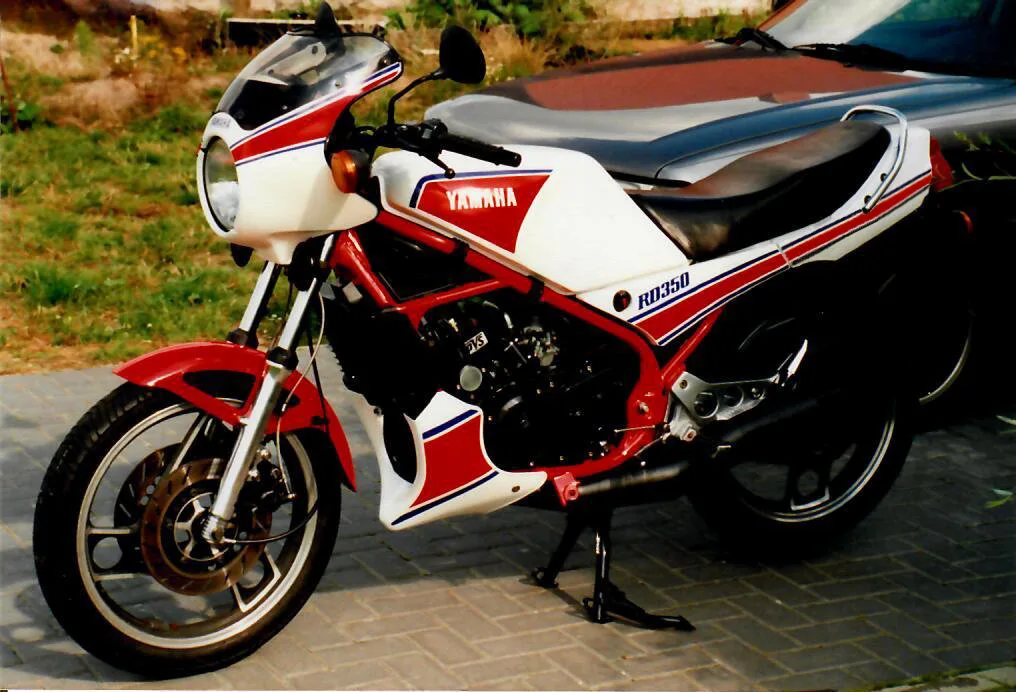
Yamaha's RD350 YPVS (Powervalve) models are identified by the prefix of their frame and engine numbers, and the codes mark real mechanical generations. 31K is the first Powervalve, the RD350LC II of 1983–84, with a claimed 59 bhp, a new frame and the YPVS exhaust power valve. For 1985 came the faired F (57V) and naked N (1JF), one-year models still built around 31K numbers. The 1986 FII and NII (1WT/1WA) brought a heavily revised engine with power-jet carburettors and a claimed 63 bhp; their electrics are the generation stamped 1UA on the CDI, and '86-on stators and rotors only work as matched sets. Japanese FII production ran into the early nineties. In 1992 production moved to Brazil: the RD350R (chassis prefix 4CE, type code 1CE) wore a twin-headlight fairing and was built until about 1995. America knew the Powervalve as the RZ350 (1984–85), including the yellow Kenny Roberts signature edition. US models carried catalytic converters in the exhausts.
The Yamaha RD50 was the smallest motorcycle ever to carry the RD badge: a 49 cc air-cooled two-stroke single with reed-valve induction, launched in Japan in March 1978 and sold across Europe into the early 1980s. Japanese-market specification was 6.3 PS at 9,500 rpm and about 85 kg, with a proper motorcycle layout — fuel tank ahead of the rider, a real gearbox and clutch, and 18-inch wheels — rather than the step-through layout of most 50 cc mopeds. A sportier RD50SP followed in June 1978 with seven-spoke cast wheels. In Britain the bike was the RD50M, restricted to 30 mph and sold to sixteen-year-olds alongside Yamaha's famous FS1-E; in Germany the RD50M became a staple of the moped classes and survivors are commonest there today. The RD50's job in the range was recruitment: it put teenagers on an RD years before they could legally ride the 250s and 350s, and many stayed loyal to the badge for life. In unrestricted Japanese form it was good for over 70 km/h.
The Yamaha RD80LC (1982–84) was the smallest of Yamaha's liquid-cooled RDs: a 79cc two-stroke single (49mm × 42mm, six-speed, 78kg) built for Europe's 80cc licence classes, making 8.7–10bhp depending on market, with German versions limited to 80km/h by design. It replaced the air-cooled RD80MX and is identified by frame codes 11A (UK), 10X (Germany LC-1), 10Y (France) and 30W (Germany LC-2).
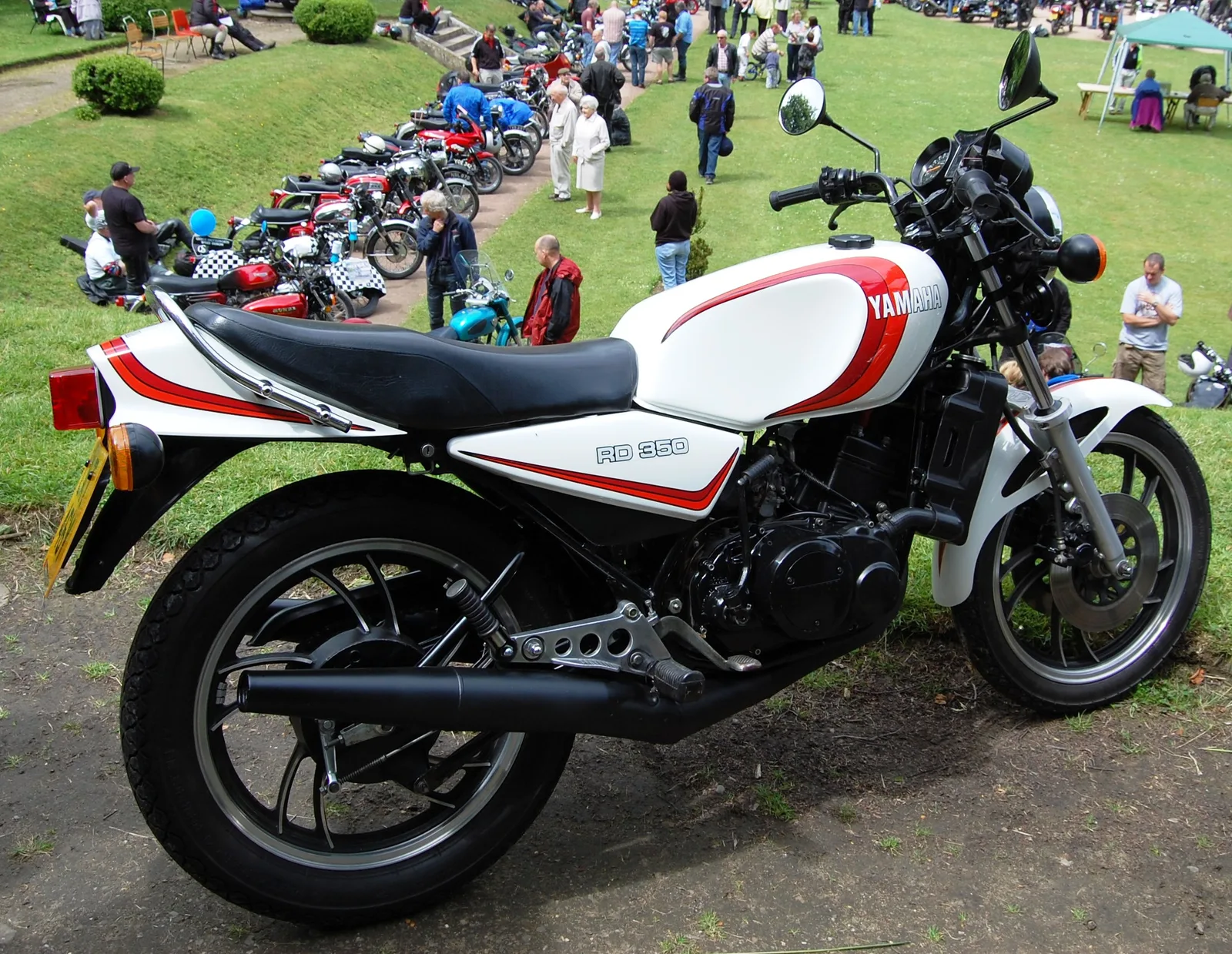
The Yamaha RD200 (1973–79) was a 195 cc two-stroke parallel twin, and the only air-cooled RD with electric start: a dynastarter — a DC generator that reversed polarity to crank the engine. Yamaha's factory figure was 20 bhp at 8,000 rpm; Bike magazine trapped one at 86 mph in 1974. The disc-braked restyle was the RD200DX.
Buying a vintage motorcycle at auction is safe if you treat it as arithmetic plus inspection, in that order. The hammer price is only the start: the buyer's premium goes on top — 15% plus VAT on the premium at H&H Classics and at Iconic Auctioneers, 12.5% plus VAT at Charterhouse, checked November 2026 — third-party online platforms can add a surcharge, and storage charges start if you miss the collection window. The contract is made when the hammer falls, the bike is sold as seen, and the catalogue description is the house's opinion, not a warranty. So the work happens at the viewing: frame and engine numbers matched against the documents, stampings checked for originality, a torch inside the tank, tyre age read off the date codes, and a ceiling set on the total cost — hammer, premium, tax, transport and recommissioning — before the sale starts. This guide walks the whole routine: how classic sales work, what the fees really add, a seven-step buying process, the viewing checks that ma